Papers We Read
On this page, we collect papers we have been reading that are related to SIG topics. Each paper comes with an AI-generated infographic summarising some key points and a human-written summary paragraph to help you identify papers you find particularly interesting and want to follow up on. We also include a link for each paper to make it easy for you to follow up. The SIG leadership team undertakes a lightweight review of the papers and the additional material we provide to ensure they fit the SIG topics and the AI hasn’t totally messed up the infographic. However, the emphasis is on lightweight here.
We want to invite all SIG members to contribute to this list. If you feel we should add another paper to the list, you can propose it through this form.
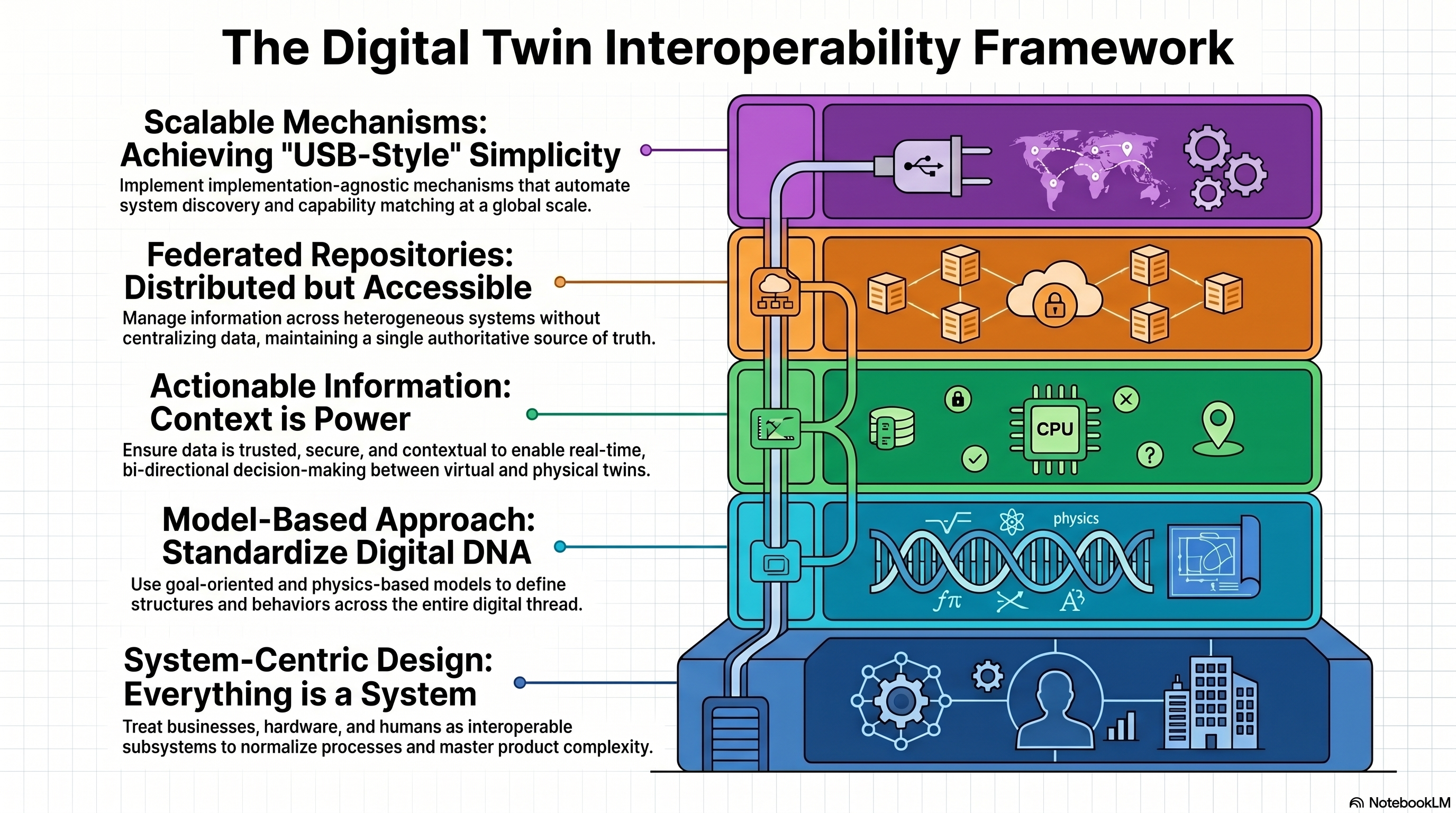
Digital Twin System Interoperability Framework, A Digital Twin Consortium White Paper
This paper introduces a dynamic, scalable framework to unify multi-vendor services into an interoperable system-of-systems. By modelling real-world entities as interconnected systems, it enables more composable, efficient, and scalable digital twin ecosystems. This framework relies on seven key concepts, including state-based interactions and federated repositories, to ensure seamless communication across different domains. By using a digital thread, the framework correlates information throughout an asset’s entire lifecycle to improve decision-making. Ultimately, the document provides a roadmap for creating a scalable and interoperable ecosystem that reduces integration costs and maximises the value of artificial intelligence.
The proposed framework implicitly relies on formal representations and shared semantic structures to enable consistent data exchange, system integration, and cross-domain communication. Concepts such as model-based approaches, federated repositories, and holistic information flow highlight the need for well-defined ontologies and logical frameworks to ensure semantic consistency and scalability.